The $43B Blind Spot
The following content was presented at the Hunter Disability Expo 2026 on 9th May 2026.
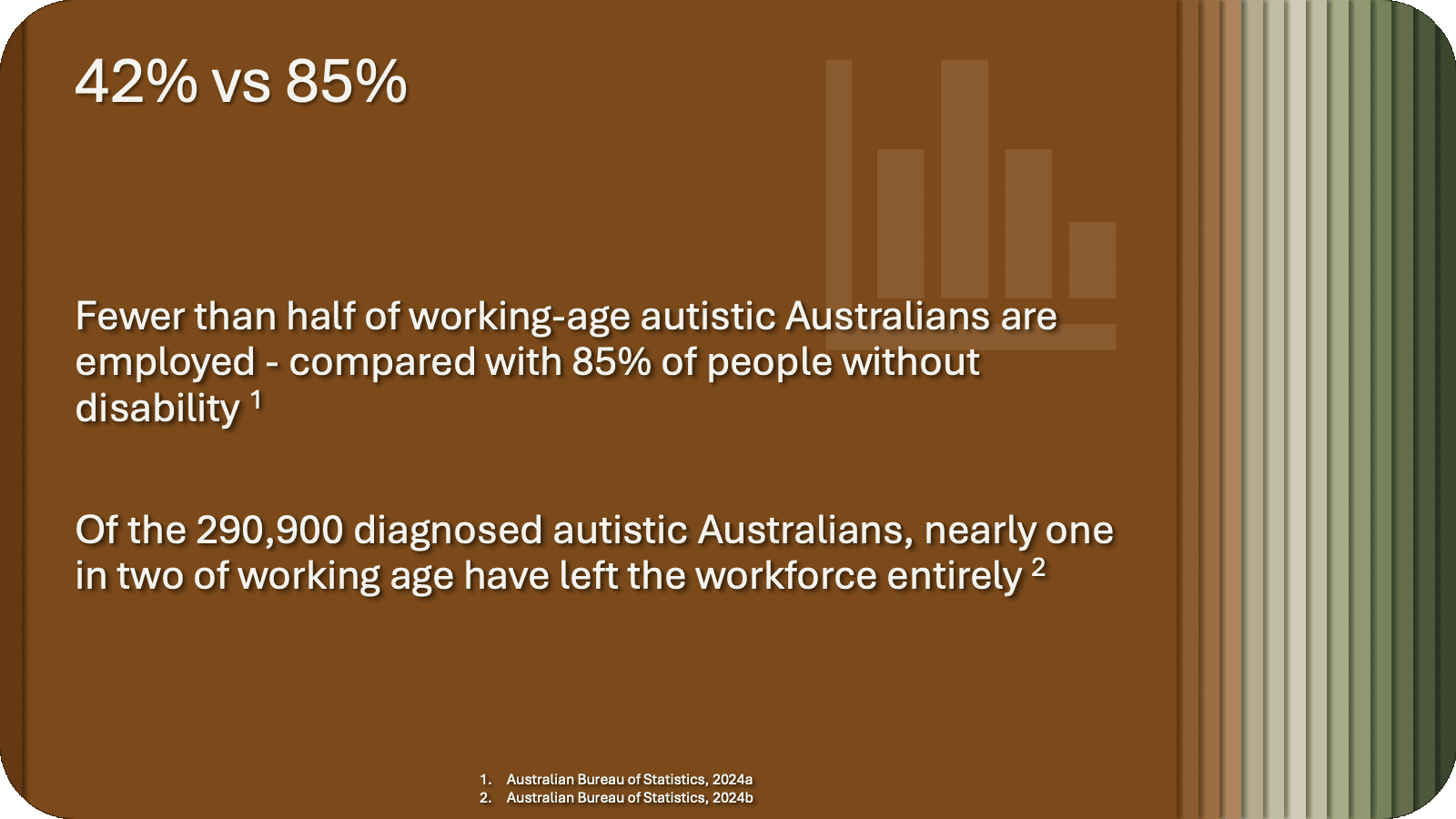
- Australian Bureau of Statistics. (2024). Autism in Australia, 2022. ABS. https://abs.gov.au/articles/autism-australia-2022
- Australian Bureau of Statistics. (2024). Employment and unemployment. ABS. https://abs.gov.au/statistics/labour/employment-and-unemployment
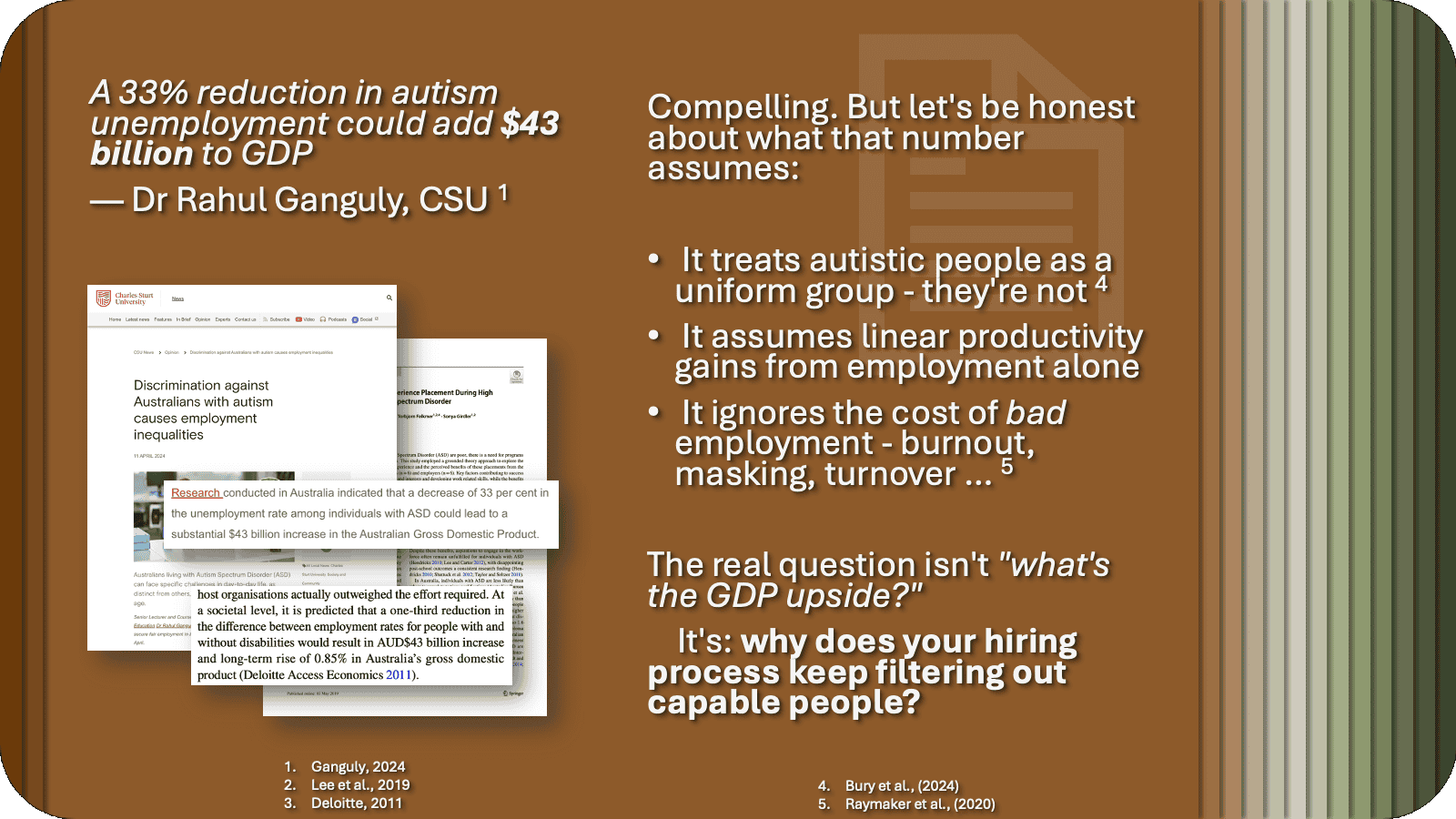
- Ganguly, R. (2024, April 11). Discrimination against Australians with autism causes employment inequalities. CSU News. https://news.csu.edu.au/opinion/discrimination-against-australians-with-autism-causes-employment-inequalities
- Lee, E., Black, M., Tan, T., Falkmer, T., Girdler, S. (2019) “I’m Destined to Ace This”: Work Experience Placement During High School for Individuals with Autism Spectrum Disorder. Journal of Autism and Developmental Disorders. DOI: 10.1007/s10803-019-04024-x
- Deloitte Access Economics. (2011). The economics benefits of increasing employment for people with disability. Canberra, ACT: Deloitte Access Economics. https://australiandisabilitynetwork.org.au/wp-content/uploads/2021/10/Economic-benefits-of-increasing-employment-for-people-with-disability_Aug11.pdf
- Bury, S. M., Hedley, D., Uljarević, M., Li, X., Stokes, M. A., & Begeer, S. (2024). Employment profiles of autistic people: An 8-year longitudinal study. Autism, 28(9), 2322–2333. DOI: 10.1177/13623613231225798
- Raymaker, D. M., Teo, A. R., Steckler, N. A., Lentz, B., Scharer, M., Delos Santos, A., Kapp, S. K., Hunter, M., Joyce, A., & Nicolaidis, C. (2020). “Having All of Your Internal Resources Exhausted Beyond Measure and Being Left with No Clean-Up Crew”: Defining Autistic Burnout. Autism in Adulthood, 2(2), 132–143. DOI: 10.1089/aut.2019.0079
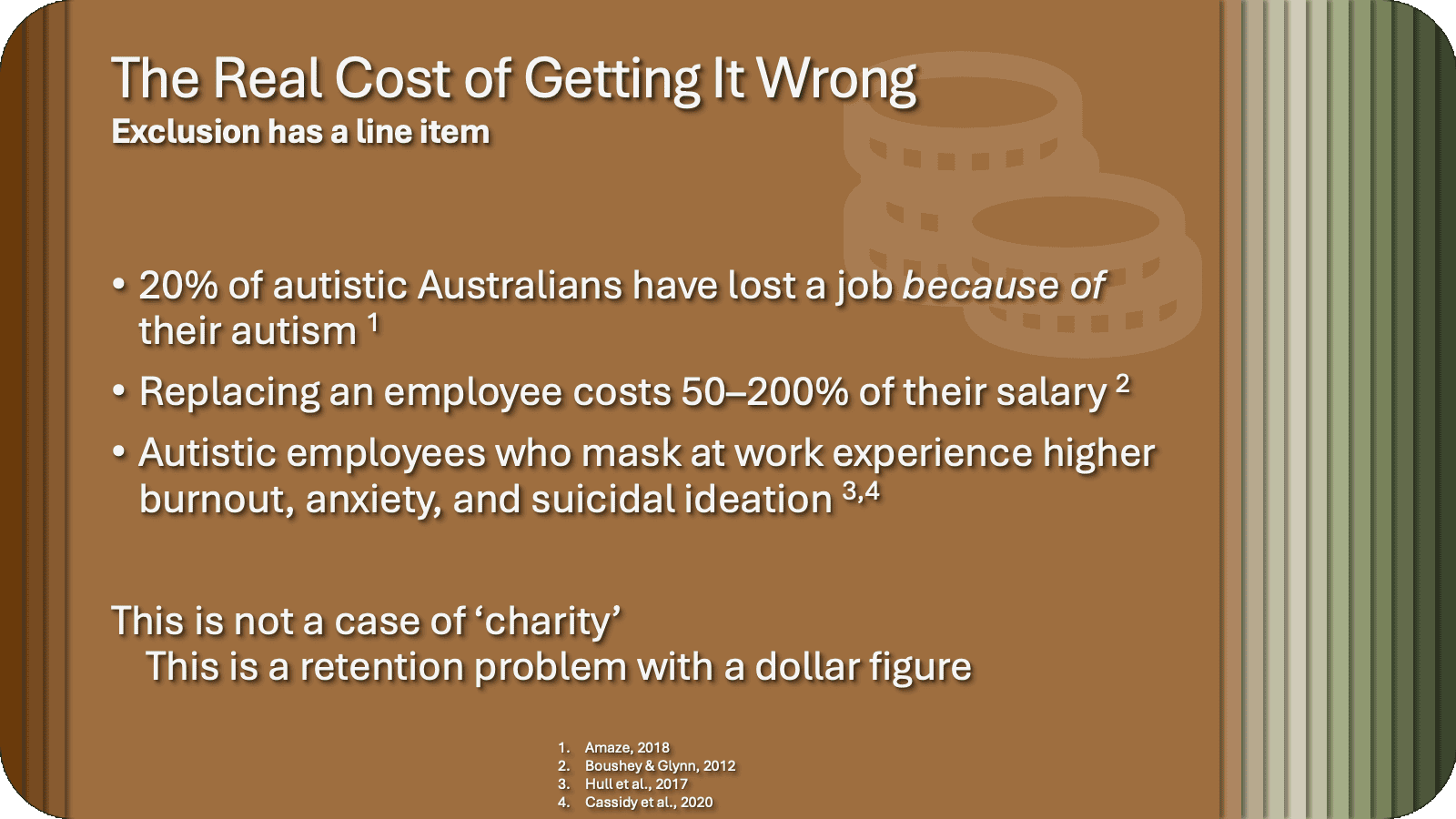
- Amaze. (2018) Autism and employment in Australia. https://www.amaze.org.au/creating-change/research/employment/
- Boushey, H., & Glynn, S. J. (2012). There are significant business costs to replacing employees. Center for American Progress. https://www.americanprogress.org/article/there-are-significant-business-costs-to-replacing-employees/
- Hull, L., Petrides, K. V., Allison, C., Smith, P., Baron-Cohen, S., Lai, M.-C., & Mandy, W. (2017). “Putting on My Best Normal”: Social Camouflaging in Adults with Autism Spectrum Conditions. Journal of Autism and Developmental Disorders, 47(8), 2519–2534. DOI: 10.1007/s10803-017-3166-5
- Cassidy, S. A., Gould, K., Townsend, E., Pelton, M., Robertson, A. E., & Rodgers, J. (2020). Is Camouflaging Autistic Traits Associated with Suicidal Thoughts and Behaviours? Expanding the Interpersonal Psychological Theory of Suicide in an Undergraduate Student Sample. Journal of Autism and Developmental Disorders, 50(10), 3638–3648. DOI: 10.1007/s10803-019-04323-3
- Modernising HR for Variant Minds - Autism → Chapter 2: The Cost of Exclusion
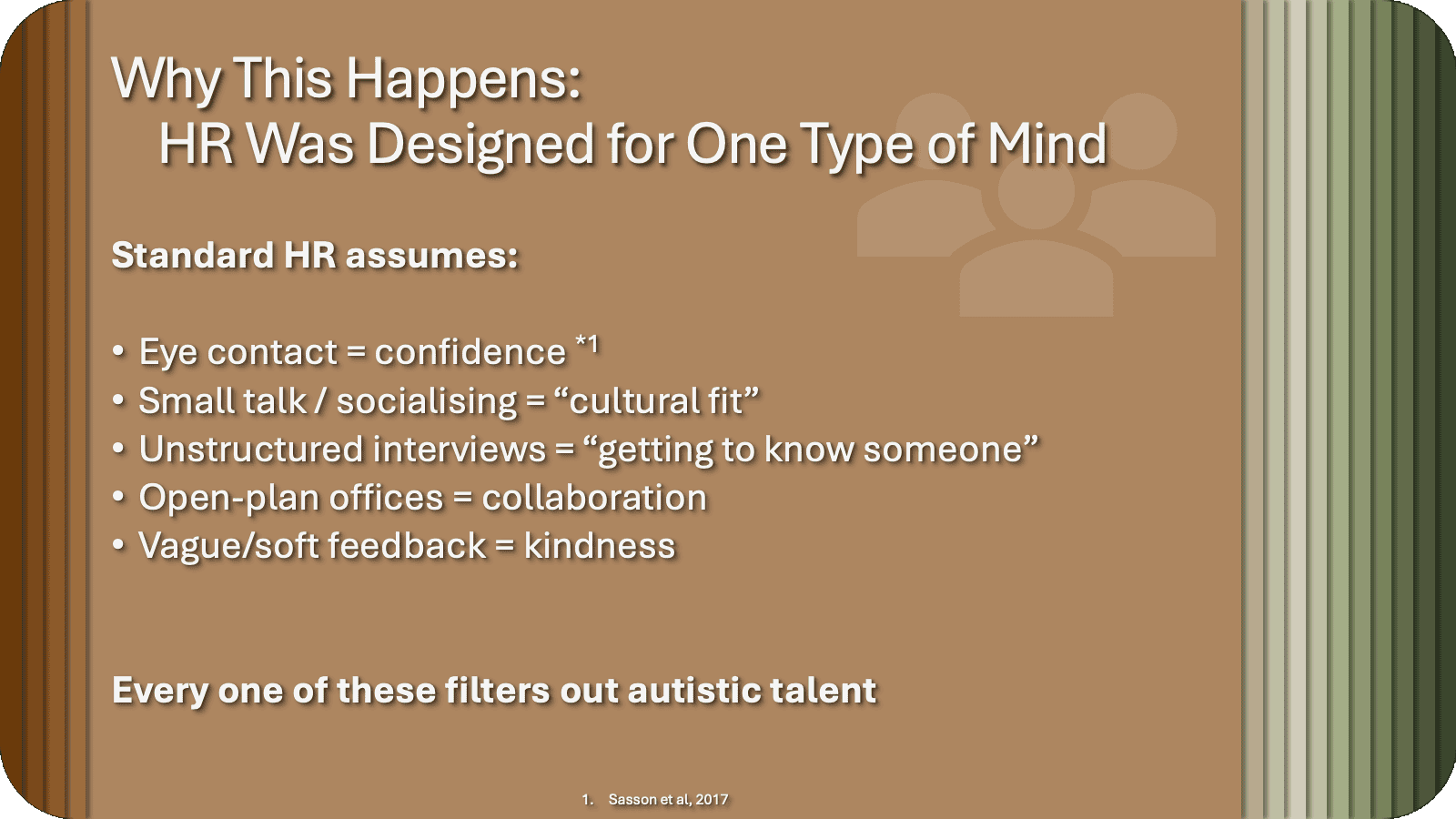
- Sasson, N. J., Faso, D. J., Nugent, J., Lovell, S., Kennedy, D. P., & Grossman, R. B. (2017). Neurotypical peers are less willing to interact with those with autism based on thin slice judgments. Scientific Reports, 7, 40700. DOI: 10.1038/srep40700
- Modernising HR for Variant Minds - Autism → Chapters 6: Hiring Without Bias, Chapter 8: Performance & Feedback, and Chapter 9: Workspace & Policy
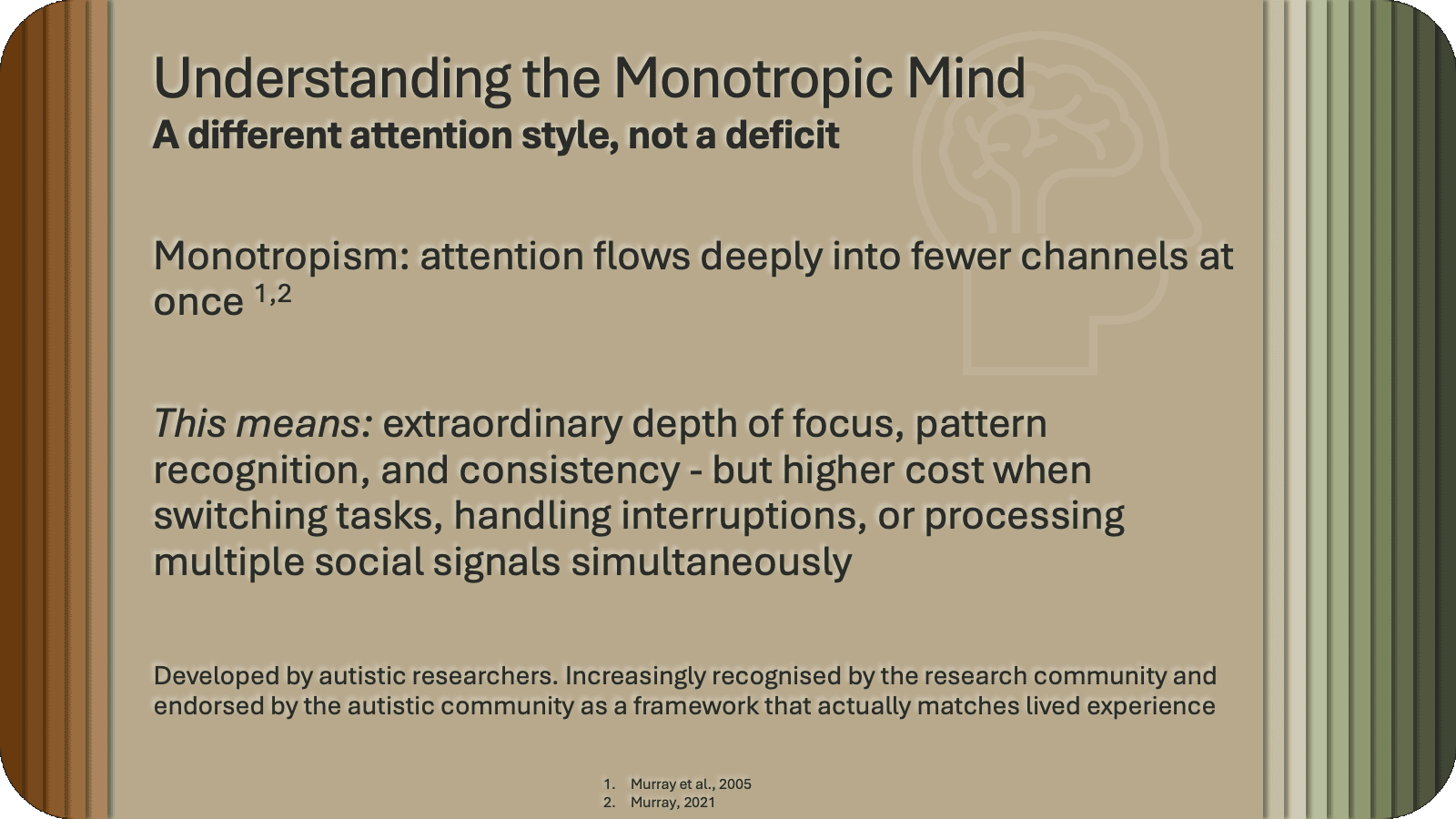
- Murray, D., Lesser, M., & Lawson, W. (2005). Attention, monotropism and the diagnostic criteria for autism. Autism, 9(2), 139–156. DOI: 10.1177/1362361305051398
- Murray, D. (2021). Monotropism: An interest-based account of autism. In F. R. Volkmar (Ed.), Encyclopedia of autism spectrum disorders (pp. 1–3). Springer.
- Modernising HR for Variant Minds - Autism → Chapters 1: What Autism Is, Chapter 5: Focus-First Job Design (for Monotropic Minds), and Chapter 14: Principles & Metrics for a Monotropic Workplace
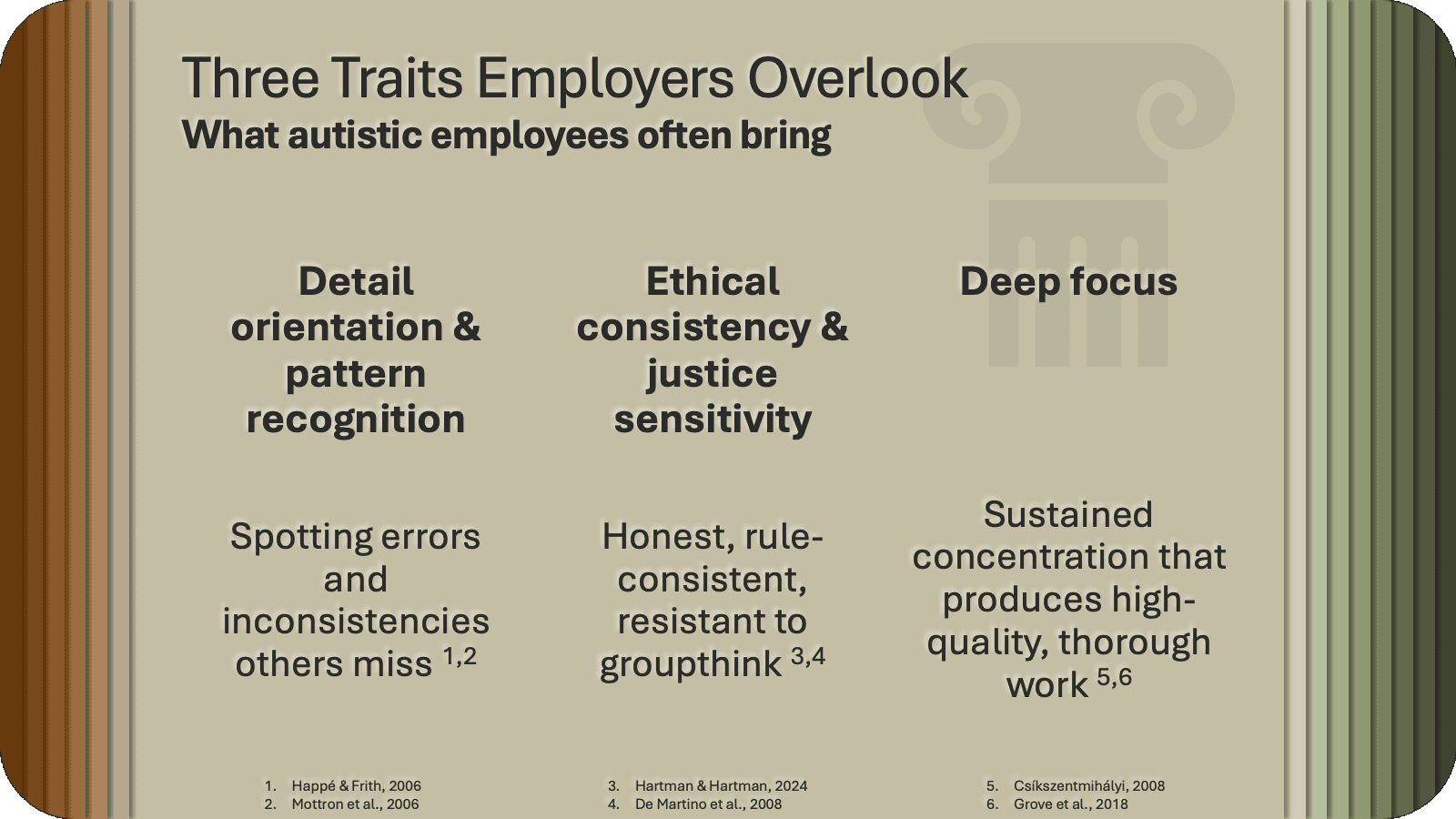
- Happé, F., & Frith, U. (2006). The Weak Coherence Account: Detail-focused Cognitive Style in Autism Spectrum Disorders. Journal of Autism and Developmental Disorders, 36(1), 5–25. DOI: 10.1007/s10803-005-0039-0
- Mottron, L., Dawson, M., Soulières, I., Hubert, B., & Burack, J. (2006). Enhanced Perceptual Functioning in Autism: An Update, and Eight Principles of Autistic Perception. Journal of Autism and Developmental Disorders, 36(1), 27–43. DOI: 10.1007/s10803-005-0040-7
- Hartman, L., & Hartman, B. (2024). An ethical advantage of autistic employees in the workplace. Frontiers in Psychology, 15, 1364691. DOI: 10.3389/fpsyg.2024.1364691
- De Martino, B., Harrison, N. A., Knafo, S., Bird, G., & Dolan, R. J. (2008). Explaining Enhanced Logical Consistency during Decision Making in Autism. The Journal of Neuroscience, 28(42), 10746–10750. DOI: 10.1523/JNEUROSCI.2895-08.2008
- Csíkszentmihályi, M. (2008). Flow: The Psychology of Optimal Experience. Harper Perennial Modern Classics. ISBN:978-0061339202. https://amazon.com/dp/0061339202
- Grove, R., Hoekstra, R. A., Wierda, M., & Begeer, S. (2018). Special interests and subjective wellbeing in autistic adults. Autism Res, 11(5), 766–775. DOI: 10.1002/aur.1931
- Modernising HR for Variant Minds - Autism → Chapter 2 → Three Distinct Autistic Traits with Strategic Value; and Chapter 11 → Trait-to-Strategy Atlas
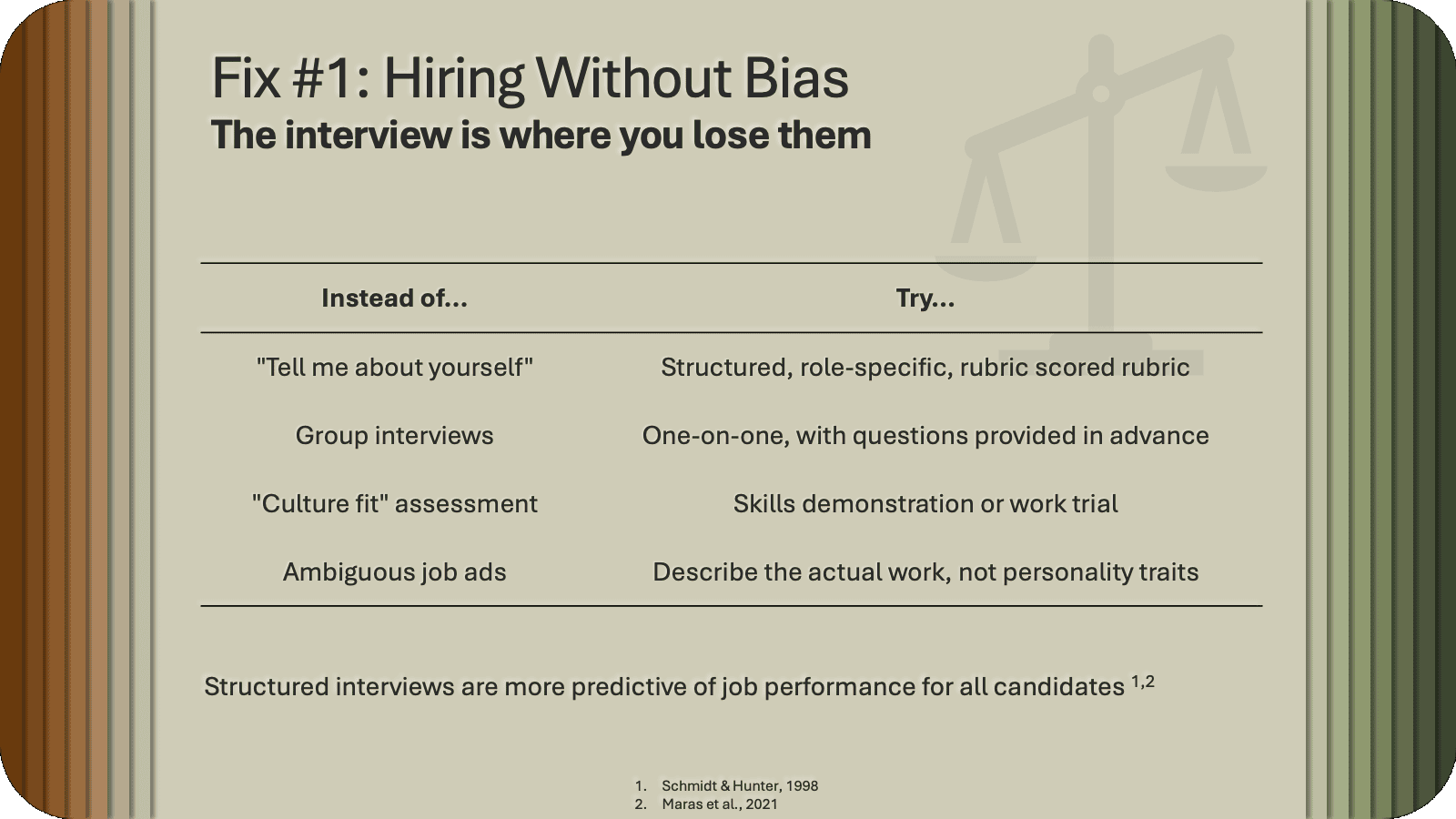
- Schmidt, F. L., & Hunter, J. E. (1998). The validity and utility of selection methods in personnel psychology: Practical and theoretical implications of 85 years of research findings. Psychological Bulletin, 124(2), 262–274. DOI: 10.1037/0033-2909.124.2.262
- Maras, K., Norris, J. E., Nicholson, J., Heasman, B., Remington, A., & Crane, L. (2021). Ameliorating the disadvantage for autistic job seekers: An initial evaluation of adapted employment interview questions. Autism, 25(4), 1060–1075. DOI: 10.1177/1362361320981319
- Modernising HR for Variant Minds - Autism → Chapter 6: Hiring Without Bias
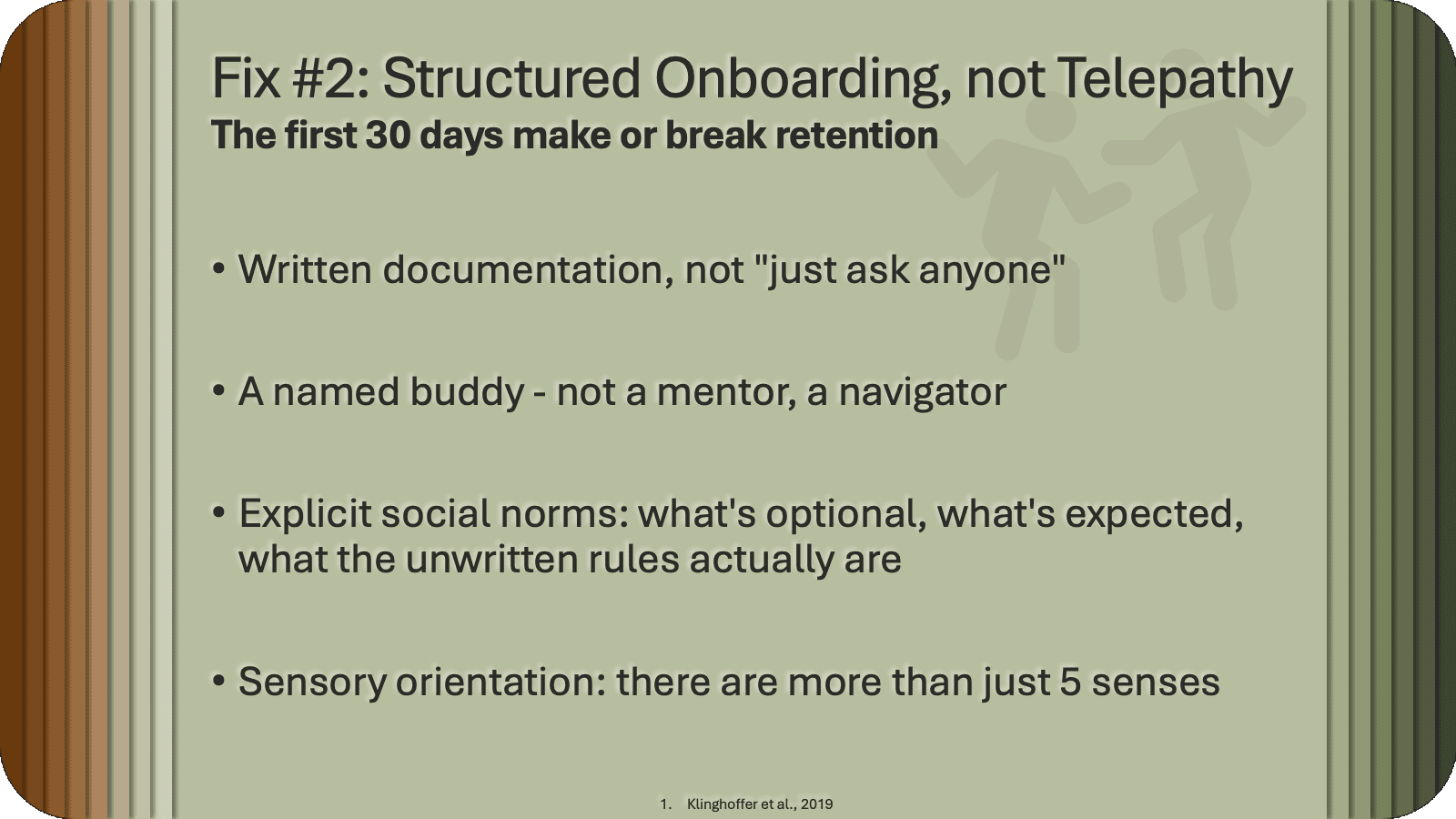
- Klinghoffer, D., Young, C., & Haspas, D. (2019). Every New Employee Needs an Onboarding “Buddy”. Harvard Business Review. https://hbr.org/2019/06/every-new-employee-needs-an-onboarding-buddy
- Modernising HR for Variant Minds - Autism → Chapter 7: On-Boarding & Training
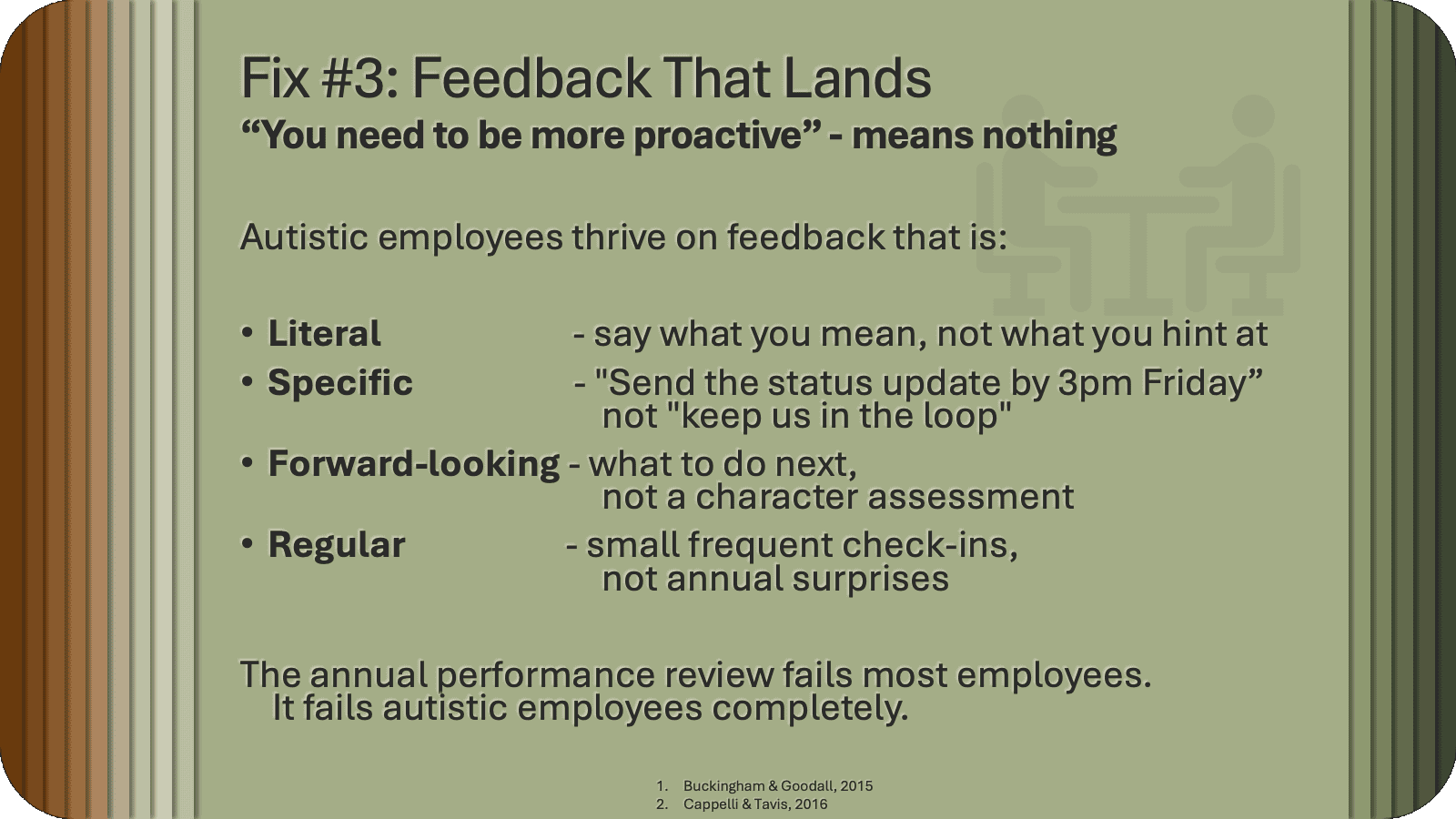
- Buckingham, M., & Goodall, A. (2015). Reinventing performance management. Harvard business review, 93(4), 40–50.
- Cappelli, P., & Tavis, A. (2016). The performance management revolution. Harvard business review, 94(10), 58–67.
- Modernising HR for Variant Minds - Autism → Chapter 8: Performance & Feedback
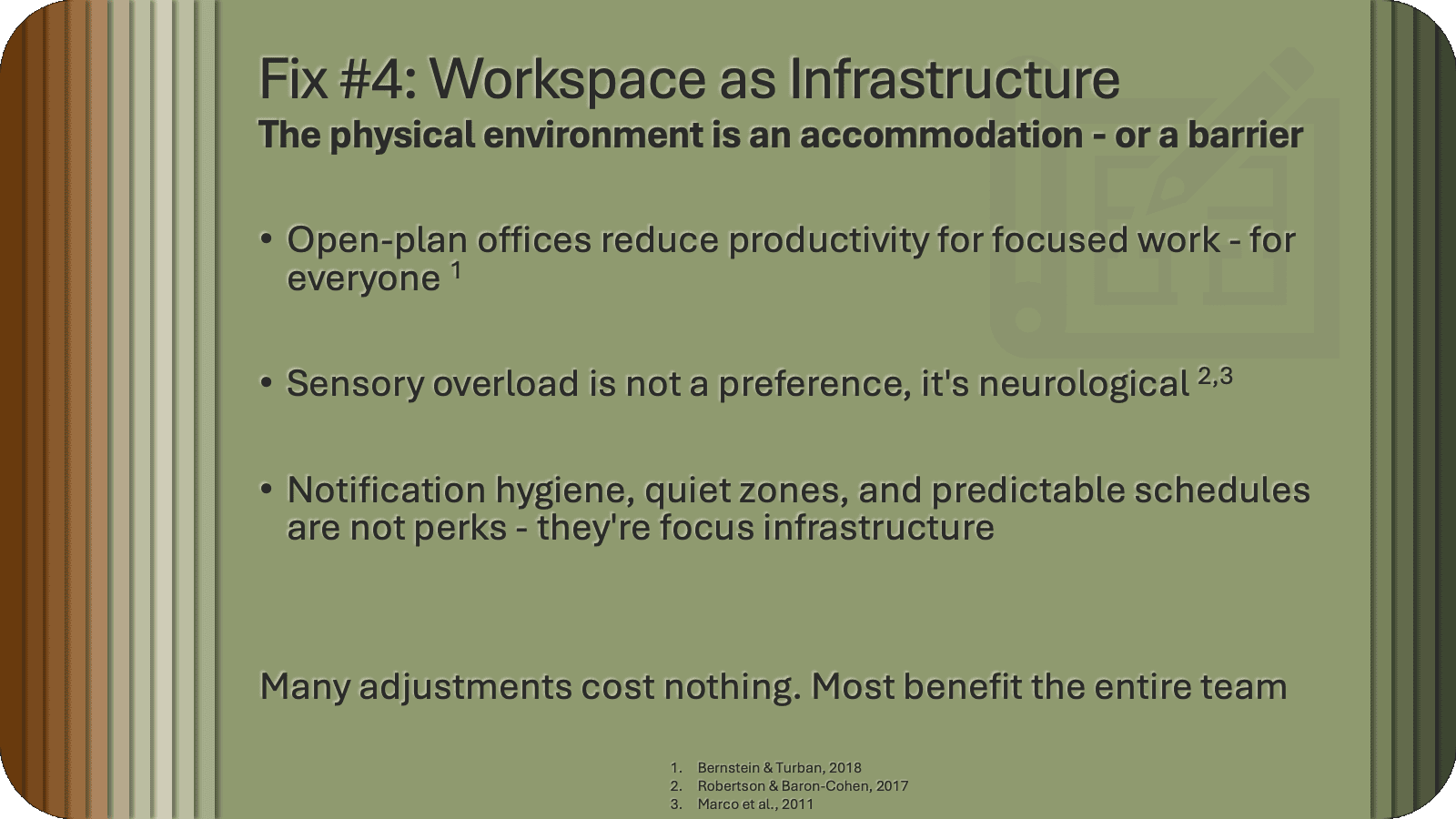
- Bernstein, E. S., & Turban, S. (2018). The impact of the 'open' workspace on human collaboration. Philos Trans R Soc Lond B Biol Sci, 373(1753). DOI: 10.1098/rstb.2017.0239
- Robertson, C. E., & Baron-Cohen, S. (2017). Sensory perception in autism. Nature Reviews Neuroscience, 18(11), 671–684. DOI: 10.1038/nrn.2017.112
- Marco, E. J., Hinkley, L. B. N., Hill, S. S., & Nagarajan, S. S. (2011). Sensory Processing in Autism: A Review of Neurophysiologic Findings. Pediatric Research, 69(8), 48–54. DOI: 10.1203/PDR.0b013e3182130c54
- Modernising HR for Variant Minds - Autism → Chapter 9: Workspace & Policy
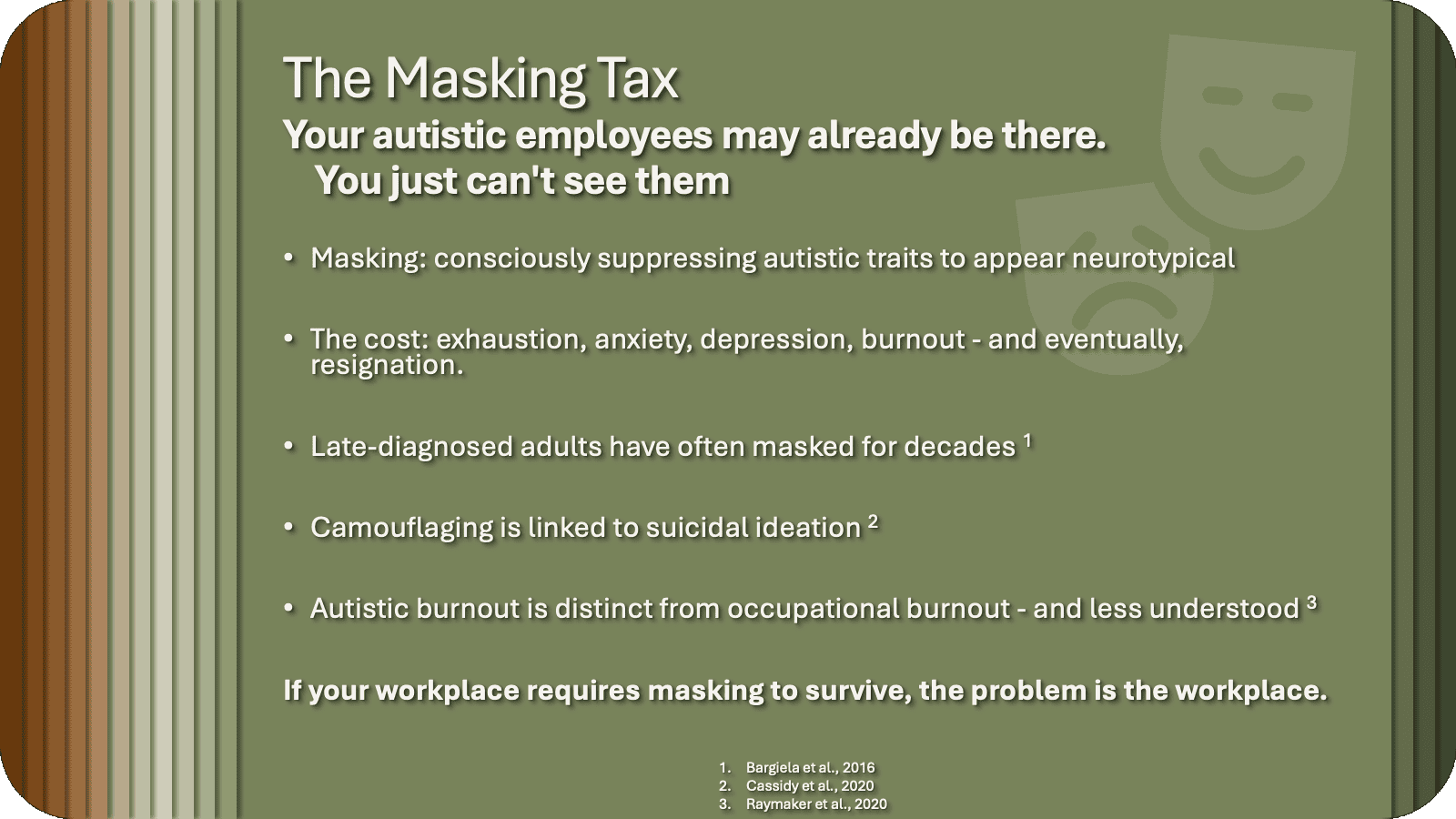
- Bargiela, S., Steward, R., & Mandy, W. (2016). The Experiences of Late-diagnosed Women with Autism Spectrum Conditions: An Investigation of the Female Autism Phenotype. Journal of Autism and Developmental Disorders, 46(10), 3281–3294. DOI: 10.1007/s10803-016-2872-8
- Cassidy, S. A., Gould, K., Townsend, E., Pelton, M., Robertson, A. E., & Rodgers, J. (2020). Is Camouflaging Autistic Traits Associated with Suicidal Thoughts and Behaviours? Expanding the Interpersonal Psychological Theory of Suicide in an Undergraduate Student Sample. Journal of Autism and Developmental Disorders, 50(10), 3638–3648. DOI: 10.1007/s10803-019-04323-3
- Raymaker, D. M., Teo, A. R., Steckler, N. A., Lentz, B., Scharer, M., Delos Santos, A., Kapp, S. K., Hunter, M., Joyce, A., & Nicolaidis, C. (2020). “Having All of Your Internal Resources Exhausted Beyond Measure and Being Left with No Clean-Up Crew”: Defining Autistic Burnout. Autism in Adulthood, 2(2), 132–143. DOI: 10.1089/aut.2019.0079
- Modernising HR for Variant Minds - Autism → Chapter 2 → Masking: The Hidden Second Shift